You’ve got 100 people coming to your party—maybe it’s a birthday bash in Manchester, a summer rave in Brighton, or a corporate shindig in London. The music’s pumping, the drinks are flowing, but then… silence. Not because the crowd’s gone quiet, but because your speakers sound like they’re powered by a toaster. You’ve just killed the vibe. And nobody wants that.
Here’s the hard truth: 90% of parties fail because of bad sound. Not the venue, not the booze, not even the DJ—just weak, tinny speakers that can’t fill the space. You don’t need a PhD in acoustics to fix this, but you do need the right gear. And if you’re reading this, you’re already one step ahead of the guy who’s about to blow £500 on speakers that’ll sound like a cheap phone speaker in a bathroom.
This isn’t about dropping cash on the flashiest brand out there. It’s about choice—picking speakers that’ll make your party legendary, not a meme. Whether you’re renting, buying, or borrowing, I’ll break it down so you don’t waste time (or money) on gear that’ll leave your guests asking, “Is the music even on?”
How Many Speakers Do You Actually Need for 100 People?
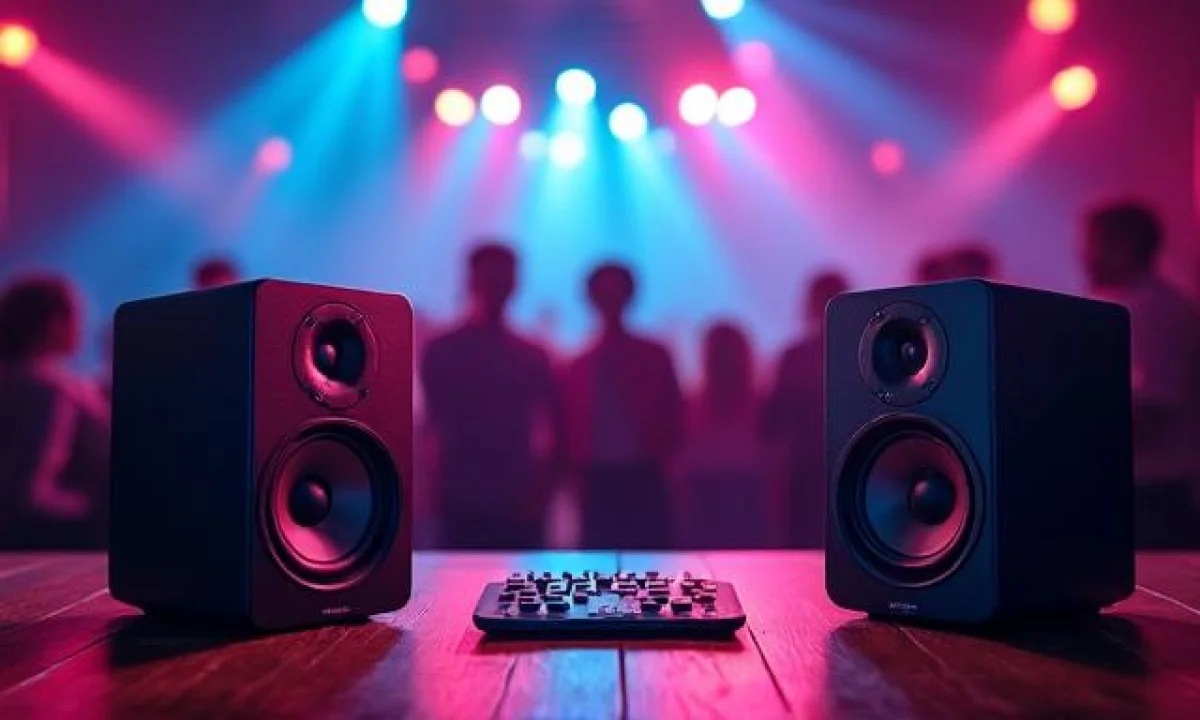
First, let’s crush a myth: You don’t need a speaker for every 10 people. That’s the kind of advice some bloke on a forum gave you in 2012, and it’s still floating around like a bad smell. Here’s the real deal:
- Indoors (e.g., warehouse, hall, large living room): 2-3 speakers (if they’re powerful enough). A single high-quality speaker with a sub can cover 100 people if placed right. Think of it like a spotlight—you don’t need 100 flashlights to light up a room.
- Outdoors (e.g., garden, park, beach): 3-4 speakers minimum. Open spaces eat sound. If you’re near water (like a lake or river), add one extra speaker—water reflects sound weirdly and can leave dead zones where the bass drops out.
- Mixed indoor/outdoor (e.g., marquee, tent, patio): 2 speakers inside + 1 outside. You want the bass to thump inside and carry outside without sounding like a muffled mess.
Pro tip: If you’re hiring a DJ or sound engineer, ask them. They’ll tell you exactly what they need to avoid the “Why does the music sound like it’s coming from a tin can?” disaster. And if they say you need 6 speakers for 100 people? Walk away. They’re either ripping you off or clueless.
The 83% Rule: Why Most People Get It Wrong
You’ve probably heard of the 83% rule—the idea that you lose 83% of your sound if you don’t place your speakers right. That’s not just some made-up stat; it’s physics. Sound waves bounce, reflect, and cancel each other out if your setup is trash.
Here’s how to avoid being that guy:
- Height matters. Speakers should be at ear level for most people. If they’re on the floor, the bass gets swallowed. If they’re hanging from the ceiling, the highs disappear. Aim for 1.2m–1.5m off the ground (that’s roughly chest height for the average UK adult).
- Angle them slightly downward. Think of it like a megaphone. If you point a speaker straight ahead, the sound shoots off into the distance. Angle it 10–15 degrees down, and it’ll spread evenly across the crowd.
- Avoid corners (unless you want booming bass and no clarity). Corners amplify low frequencies, which can make your music sound like a washing machine on steroids. If you’re going for a bass-heavy vibe (like a drum & bass or dubstep party), corners can work. For everything else? Keep speakers away from walls.
And if you’re outdoors? Wind is your enemy. A gentle breeze can turn your carefully balanced sound into a mess. Solution: Rent weatherproof speakers (like the JBL PRX800 or QSC K12) and position them under cover if possible. Or just accept that your guests might hear the occasional “What did you say?” over the wind.
What Wattage Do You Need? (Spoiler: It’s Not What You Think)
Here’s where most people screw up: They confuse watts with volume. Watts = power. Volume = how loud it sounds. You can have a 10,000-watt speaker that sounds like a whisper if it’s not efficient. And you can have a 500-watt speaker that’ll make your eardrums bleed if it’s well-designed.
For 100 people, here’s the breakdown:
| Setting | Minimum RMS Watts (Per Speaker) | Recommended Setup | Example Speakers (UK Availability) |
|---|---|---|---|
| Indoors (e.g., club, hall, large room) | 500W–800W | 2 speakers + 1 subwoofer | QSC K12.2 + QSC KX181 |
| Outdoors (e.g., garden, park, beach) | 800W–1,200W | 3–4 speakers + 1 subwoofer | JBL PRX800 + JBL PRX900 |
| Mixed (e.g., marquee, tent, patio) | 600W–1,000W | 2 speakers inside + 1 outside + 1 sub | RCF ART 7 + RCF SUB 8004 |
RMS vs. Peak Watts: Ignore the “peak” watts. That’s just marketing fluff. RMS (Root Mean Square) watts are what matter. If a speaker says “1,000W peak,” but only “200W RMS,” it’s lying to you. Stick to RMS like your party depends on it (because it does).
The 3:8 Rule (And Why It’ll Save Your Party)
You’ve probably heard of the 3:8 rule—the idea that for every 3 watts of speaker power, you need 8 watts of amplifier power to avoid distortion. But here’s the thing: Most modern speakers are “active,” meaning the amp is built in. So if you’re buying a speaker that says “1,000W,” that’s already accounting for the amp. No need to overcomplicate it.
Where the 3:8 rule does come in handy? If you’re renting separate amps and speakers. Example: You buy a 500W RMS speaker but only pair it with a 300W amp. Guess what? Your music’s gonna sound like it’s being played through a sock. Always match (or exceed) the 3:8 ratio.
And if you’re still confused? Ask the rental company. Most UK-based party equipment hire shops (like Stage Hire UK or Party Hire Direct) will sort you out with a setup that’s already balanced. Just tell them your space, your crowd size, and your music genre, and they’ll do the math for you.
How to Avoid the “Tin Can” Sound (Common Mistakes)
You’ve got the right speakers, the right wattage, the right placement… but the music still sounds like crap. Why? Because you’ve fallen into one of these traps:
- Using consumer-grade speakers (e.g., Bluetooth party boxes). Those £200 JBL PartyBox speakers? Cute for a backyard BBQ with 20 people. For 100? They’ll sound like a toy. Pro speakers have better drivers, better amps, and better build quality.
- Not using a subwoofer. Without a sub, your bass will sound weak or muddy. A single 800W–1,200W sub (like the QSC KX181) will make the difference between “meh” and “this is a club.”
- Ignoring the DJ’s needs. If you’ve hired a DJ, ask them: “What do you need to sound good?” Some DJs bring their own gear. Others expect you to provide XLR inputs, DI boxes, and monitor mixes. Don’t assume—ask.
- Forgetting about power. If you’re plugging speakers into a UK 13A socket, you’re limited to 3,000W total (that’s 3,000W across all speakers and amps combined). For bigger setups, you’ll need a generator or a proper power distribution unit (PDU). And no, your extension lead won’t cut it.
- Skipping the sound check. Always test the sound an hour before the party starts. Play music at full volume and walk around the space. If there are dead zones (where the sound cuts out), move the speakers. If the bass is boomy in one corner, adjust the EQ. No sound check = no good party.
And here’s a bonus tip: Record a 10-second clip of your sound setup before the party starts. Play it back on your phone. If it sounds good to you, it’ll sound good to your guests. If it sounds like garbage? Fix it before 100 people show up.
What About Brands? (The Ones Worth Your Money)
You don’t need to drop £5,000 on Bose or Sonos to throw a killer party. But you do need gear that’s built for loud, clear sound in big spaces. Here are the top 5 brands you should consider in the UK:
- QSC (USA)
- Why? Reliable, powerful, and used by pros. Their K12.2 speakers are a staple at UK festivals.
- Best for: Indoor/outdoor events, clubs, large halls.
- Price range: £800–£1,500 per speaker.
- Where to buy: Stage Hire UK, Partsworld, or eBay (for used gear).
- JBL (USA)
- Why? Great bass response, durable, and widely available. Their PRX series is a party favourite.
- Best for: Outdoor parties, beaches, gardens.
- Price range: £600–£1,200 per speaker.
- Where to buy: Amazon UK, PMT Online, or local hire shops.
- RCF (Italy)
- Why? Lightweight but punchy. Their ART series is a hit with mobile DJs.
- Best for: Mixed indoor/outdoor, marquees, tents.
- Price range: £700–£1,400 per speaker.
- Where to buy: Partsworld, eBay, or specialist audio retailers.
- Mackie (USA)
- Why? Budget-friendly but still pro-level. Their Thump series is great for bass-heavy music.
- Best for: Indoor parties, small clubs, home setups.
- Price range: £300–£800 per speaker.
- Where to buy: Gear4Music, Amazon UK, or local music shops.
- Bose (USA)
- Why? Premium sound, but overkill for most parties. Their L1 Model II is a beast, but it’s £2,000+ and better for smaller, high-end events.
- Best for: Corporate events, weddings, upscale parties.
- Price range: £1,500–£3,000+.
- Where to buy: Bose UK website, John Lewis, or specialist hire companies.
Pro Tip: If you’re hiring, avoid no-name brands. You get what you pay for. Stick to QSC, JBL, RCF, or Mackie, and you won’t regret it.
Rent vs. Buy: Which Is Smarter for Your Party?
Here’s the math:
- Renting (e.g., from Stage Hire UK or Party Hire Direct):
- Cost: £200–£600 per day for a full setup (2–4 speakers + sub + cables).
- Pros:
- No long-term commitment.
- Gear is already tested and balanced.
- You get technical support if something goes wrong.
- Cons:
- You’re at the mercy of the hire company’s availability.
- You might not get the exact brand/model you want.
- Buying (e.g., from PMT Online or Gear4Music):
- Cost: £1,000–£5,000+ for a full setup (new). £500–£2,000 if you buy used.
- Pros:
- You own the gear—great if you throw parties often.
- You can customise the setup exactly how you want.
- Long-term, it’s cheaper if you use it more than 3–4 times a year.
- Cons:
- Storage is a pain. Where are you going to keep a 1,000W speaker?
- Maintenance costs. Speakers break. Amps fail. Cables fray.
- Depreciation. Speakers lose value fast—especially if you buy new.
Bottom line: If this is a one-off party, rent. If you’re throwing parties every month, buy (or lease). And if you’re somewhere in between? Rent first, then decide.
Here’s the truth: Your party’s success or failure hinges on two things—booze and sound. And since you can’t serve 100 people with a single bottle of vodka, you’d better get the sound right.
So, what’s the move? If you’re throwing a one-time bash, rent a QSC K12.2 + sub setup from a UK hire company. If you’re a serial party host, invest in JBL PRX800s or RCF ART 7s and build your system over time. And no matter what, test the sound before your guests arrive.
Now go drop that £200 on a PartyBox speaker and watch your party turn into a meme. Or do the smart thing, follow this guide, and make sure your event goes down as legendary—not a disaster. Your future self (and your eardrums) will thank you.
Need a quick checklist? Grab this before you book anything:
- ✅ Indoors? 2–3 speakers + 1 sub. Outdoors? 3–4 speakers + 1 sub.
- ✅ RMS watts matter—ignore peak watts. Aim for 500W–1,200W per speaker.
- ✅ Place speakers at ear level, angled slightly down.
- ✅ Rent if it’s a one-off. Buy if you’re a party pro.
- ✅ Always do a sound check. No excuses.
Now go make your party unforgettable—for the right reasons.
What wattage of speaker do you need for a crowd of 100 people?
For a crowd of 100 people, you’ll need speakers with at least 500 to 1000 watts. This ensures everyone can hear the music clearly, even at the back. If you’re outdoors, consider bumping it up to 1000 watts for better sound coverage.
What is the 83% rule for speakers?
The 83% rule suggests that for optimal sound, your speakers should be powered at 83% of their maximum capacity. This helps avoid distortion while ensuring clear audio, which is crucial for a lively party atmosphere.
How many speakers do you need for 100 people?
For a party of 100, you generally need at least two good-quality speakers. This setup provides balanced sound throughout the venue, ensuring everyone gets in on the action. If it’s a larger space, consider adding more speakers for better coverage.
What is the 38 rule for speakers?
The 38 rule states that the distance between speakers should be about 38% of the total audience area. This helps maintain an even sound distribution, making sure no one misses out on the beats, especially on the dance floor.
What are the best party speakers with bass?
The best party speakers with bass include brands like Rockville and JBL. They deliver powerful sound and deep bass, perfect for keeping the energy high at your bash. Look for models that are Bluetooth-enabled for easy streaming from your phone.
What is the loudest party speaker available?
The loudest party speakers often reach over 2000 watts, like some models from brands such as Behringer and QSC. They’re perfect for large gatherings, ensuring the music pumps through the crowd, whether in a pub in London or a garden in Manchester.